
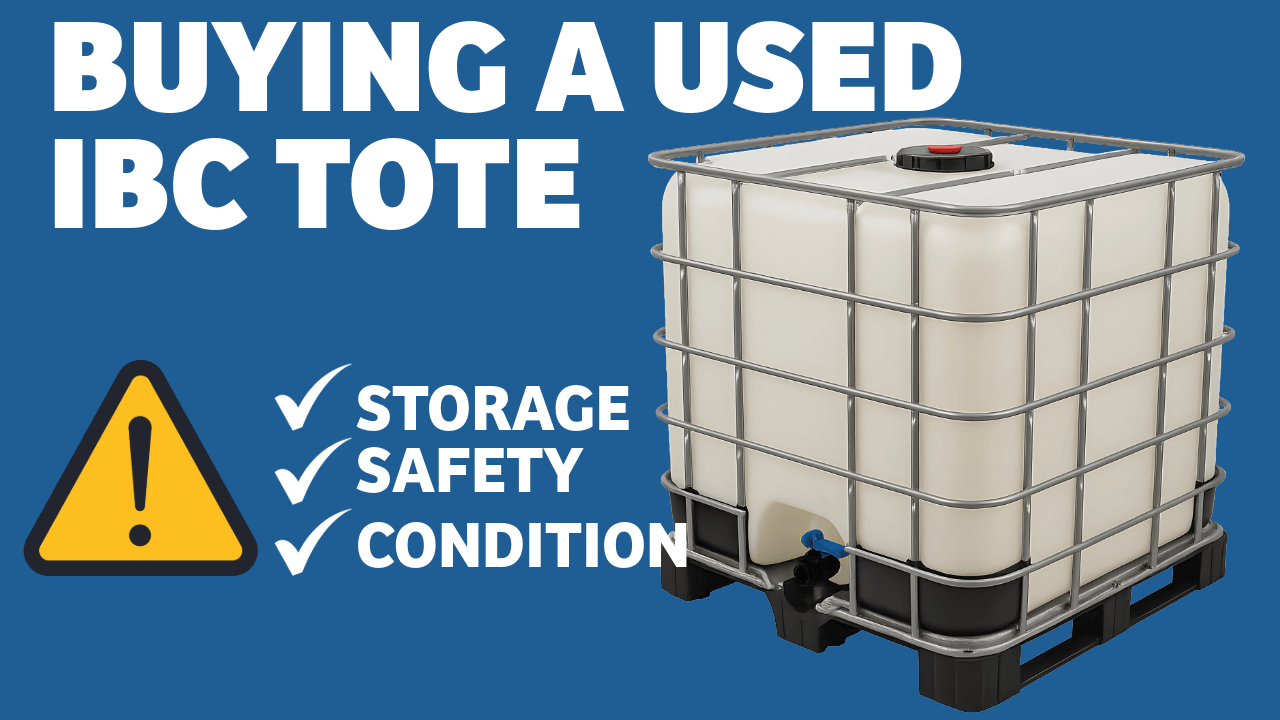
Buying a used IBC tote can save money. However, you must know what to check before purchasing. First, remember many secondhand totes come from industrial environments. Therefore, some are not safe for water storage or rainwater systems. Next, verify the tote’s previous contents. Then, inspect the tank and metal cage for damage or wear. Also, watch for common red flags such as strong odors, stains, or cracks. By following these steps, you can choose a tote that is safe, reliable, and worth the investment.
5 Tips to buying a used IBC Tote
✔ 1. Confirm the Previous Contents
This is the MOST important step.
If the seller cannot confirm what was stored inside—walk away.
Preferred previous contents (safe for water):
- Food ingredients
- Vinegar
- Glycerin
- Alcohol
- Water
- Pharmaceutically safe liquids
Avoid at all costs:
- Pesticides
- Herbicides
- Acids
- Oils and fuels
- Industrial detergents
- Anything toxic or unknown
✔ 2. Check the Plastic Tank
Look for:
- No strong chemical smells
- No staining
- No dents or bulging
- No cracks at seams or corners
✔ 3. Inspect the Cage
A solid steel cage ensures the tote stays stable.
Check for:
- No rust
- No broken welds
- Cage firmly attached to pallet
✔ 4. Inspect the Valve & Caps
Make sure:
- Valve opens and closes smoothly
- No leaks around the seal
- Threads are not stripped
- Top cap tightens properly
✔ 5. Choose the Right Pallet Type
IBC totes come on three pallet styles:
| Pallet Type | Best For |
|---|---|
| Plastic pallet | Outdoor storage, rainwater use |
| Composite pallet | Good all-around option |
| Wood pallet | Indoor or dry environments |
For rainwater systems, plastic or composite pallets are best.
Buying a used IBC Tote: How Much Should it Cost?
Here’s the typical price range for 1000L used IBC totes:
| Condition | Price RangeIBC |
|---|---|
| Rebottled (new inner bottle) | $120–$180 |
| Reconditioned (cleaned) | $60–$120 |
| Used – food-grade | $50–$100 |
| Used – unknown contents | $20–$80 (not recommended) |
If the price is extremely low, verify why.
Red Flags That Mean “Do Not Buy”
Avoid totes with:
- Unknown previous contents
- Strong chemical smell
- Staining inside the bottle
- Damaged cage or pallet
- Leaking valve
- Seller is unwilling to answer questions
Your health and safety are worth more than a cheap tote.
Best Choice for Rainwater Harvesting
For safe water collection, the recommended order is:
- Rebottled IBC tote (safest)
- Food-grade used tote
- Reconditioned tote with documented contents
Avoid:
- Any tote that previously stored chemicals, even if “cleaned.”
Final Tips Before Buying a used IBC Tote
- Always rinse and sanitize the tote after purchase
- Replace the valve or cap if it shows wear
- Elevate your tote on blocks or a pallet for better water pressure
- Use a first-flush diverter if connecting to gutters
Buying a used IBC tote doesn’t have to be risky, as long as you verify its history and inspect its condition. First, confirm the previous contents. Then, choose a tote suited for your intended use. Additionally, prioritize safety and ask the right questions before purchasing. Most importantly, avoid totes with unknown or questionable contents. As a result, you’ll get a dependable container that lasts for years. Finally, with a careful approach, a used IBC tote becomes a cost-effective solution for rainwater and off-grid storage.